

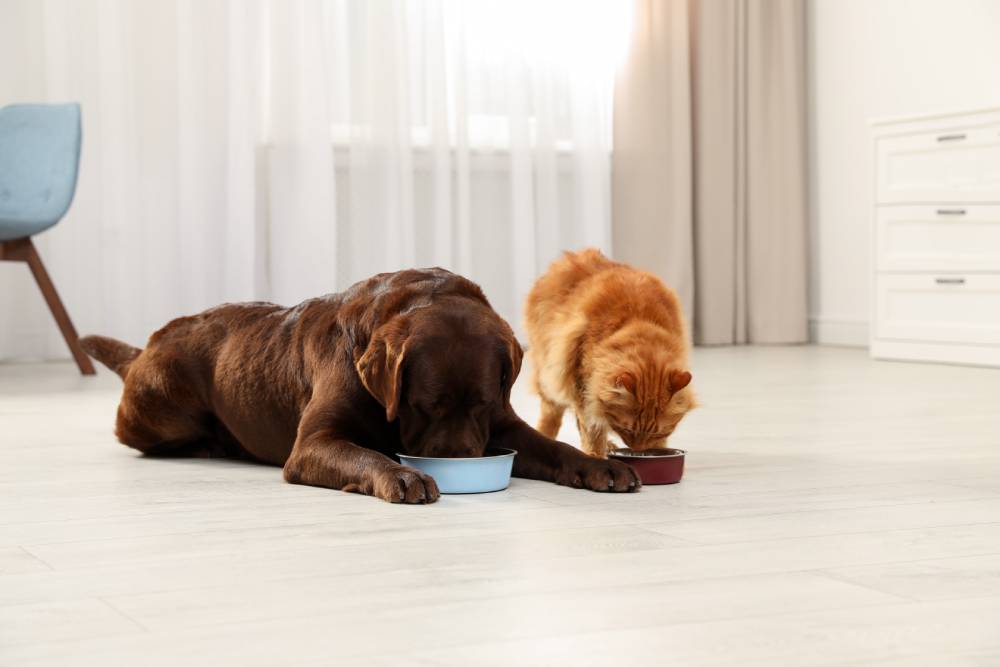
As veterinarians and animal care professionals, we understand that pet owners want the best for their companion animals. Raw diets are often marketed as “natural,” “ancestral,” or “healthier” than conventional pet food — but there are significant and well-documented risks associated with feeding raw pet food that every pet guardian should consider before making dietary choices. Current scientific evidence and regulatory data show that raw diets pose significant and preventable risks. For this reason, we do not ever recommend feeding raw diets to dogs or cats.
What Is a Raw Pet Food Diet?
Raw pet food typically contains uncooked animal proteins — meat, organs, or bones — that have not been cooked to kill harmful bacteria. While these products may seem appealing, raw diets differ fundamentally from processed pet foods that undergo cooking to eliminate pathogens (disease causing bacteria.)
The Proven Risks of Raw Pet Food
Raw diets have been repeatedly linked to contamination with dangerous pathogens, including:
- Salmonella
- Listeria monocytogenes
- coli
These bacteria can cause illness and sometimes death in pets and humans alike. These bacteria can also be spread to humans through:
- Handling raw food
- Contaminated bowls or surfaces
- Pet saliva or feces after consuming raw diets
Pets may appear healthy while still shedding bacteria, unknowingly putting all household members at risk — especially children, elderly individuals, pregnant people, and anyone who is immunocompromised.
FDA Warnings and Recalls
The U.S. Food and Drug Administration (FDA) has issued multiple warnings and recalls for raw pet food products after testing found contamination — including in unopened packages.
If you’re feeding your pet a raw diet check this link to ensure that it is not on the recent recall list.
These recalls reinforce an important point: even commercially prepared raw foods are not reliably safe, and contamination is not rare or accidental — it is an inherent risk of uncooked animal products.
Why We Do Not Recommend Raw Diets
There is no proven health benefit of raw diets that outweighs the risks, while the dangers are well documented. Because of this:
- We do not recommend raw food diets under any
- We strongly recommend feeding a complete, balanced, high-quality diet recommended by your veterinarian.
Veterinarian-recommended diets are formulated to:
- Meet all nutritional needs
- Reduce the risk of foodborne illness
- Support long-term health and disease prevention
- Protect both pets and people in the household
The Best Step for Your Pet’s Health
If your pet is currently on a raw diet, switching to a veterinarian-recommended, quality commercial diet is one of the best steps you can take to protect and prevent illness — for your pet and for your family.
If you have questions about nutrition or need help choosing a safe and appropriate diet, our team is always happy to help guide you.




Leave A Comment